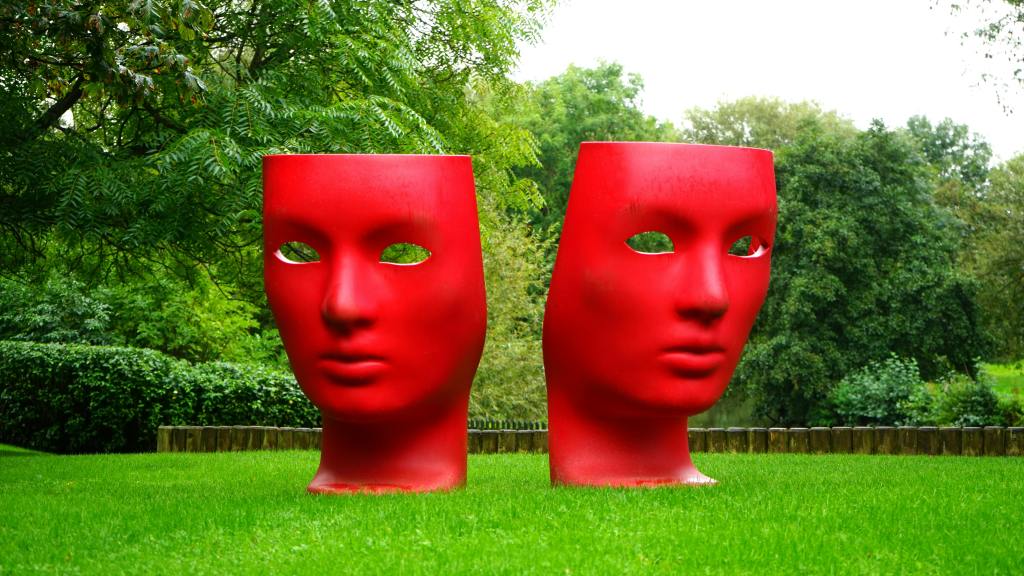
You may have heard the term “high masking autistic” – what does this actually mean? Camouflaging covers a variety of ways that autistic folks attempt to hide their autism from allistics (non-autistics). Camouflaging/masking is particularly common among autistic women, whether AFAB or transgender, especially late diagnosed. Women have been culturally conditioned to be social more than men have, and, despite what some may think, autistic people do want to be connected to others as much as allistics do, albeit the connection may look different.
Camouflaging is something that autistic people do to attempt to blend into a group, to become invisible or at least not stand out. Masking is when we hide aspects of ourselves to avoid being excluded from the group. Assimilation is when we have been masking and camouflaging for so long that we no longer know who we really are!
Camouflaging, Masking and Assimilation (I will refer to all of these as “camouflaging” for simplicity’s sake); autistics engage in all of these. What are some ways we may camouflage?
- Forcing eye contact
- Mimicking body language and/or speech patterns of others
- Selective mutism (choosing or being unable to speak in certain circumstances)
- Monitoring our facial expressions in order to appear “like allistics”
- Rehearsing conversations ahead of time (this can be problematic if the other person doesn’t “know their lines” and throws us off our script)
The cost of camouflaging is high. First and foremost, it alienates us from our true selves. This is both destructive and exhausting. Camouflaging may lead to depression and anxiety, poor self image and even suicidal ideation.https://pubmed.ncbi.nlm.nih.gov/31820344/
If you are curious about how and to what extent you may be camouflaging, there is an online assessment you can take called the Camouflaging Autistic Traits Questionnaire (CAT-Q). It provides three metrics: “(1) “compensation” for autism-related difficulties in social situations, such as using scripts and copying others from carefully observing other people; (2) “masking” one’s autistic characteristics, by constantly monitoring one’s own behaviors (e.g., eye contact, facial expression, gesture) to show a non-autistic persona to others; and (3) “assimilation” which describes behavioral techniques used to fit in better with others (e.g., forcing oneself to interact by performing and pretending)” You can take the CAT-Q here.
What can we do about camouflaging? First, we should be gentle and kind to ourselves, understanding that we are responding to the prevailing culture of neuroconformity, and also that masking can be a way for us to find safety in some situations. Dr. Devon Price has pointed out in his book Unmasking Autism that, especially for marginalized people and people of color, masking can help us to survive dangerous situations.
Shedding our mask is something that takes time, because as we do so, we will uncover our authentic selves, who we may find to be relative strangers! That said, the work is worth it for the improvement in our mental and physical health.
I’ve been working at unmasking for several years now. At first, it felt strange, to be honest, because my camouflaging habits were so deeply ingrained, I wasn’t sure who I would be without these behaviors. Gradually I began to do several things. I noticed sensory and emotional queues that I was becoming overwhelmed and, when needed, I would take a break from a social (or work) situation in order to recalibrate. I allowed myself to stim, either surreptitiously or openly, depending on the situation. I have mostly stopped forcing eye contact. If eye contact is “called for” I look in the vicinity of someone’s eyebrows. If the situation feels safe, I may disclose my autism and explain that my communication style may differ from the allistic style, how and why.
I’ve also found more autistic friends, and uncovered some neurodivergence among people I already knew. These connections often feel more natural and rewarding than being with allistics. Even when we drop the mask, it can be exhausting to feel we are living on an alien planet. Self care is key. We need to be kind to ourselves as we gradually shed habits that no longer serve us.
 Autistic Rabbi